
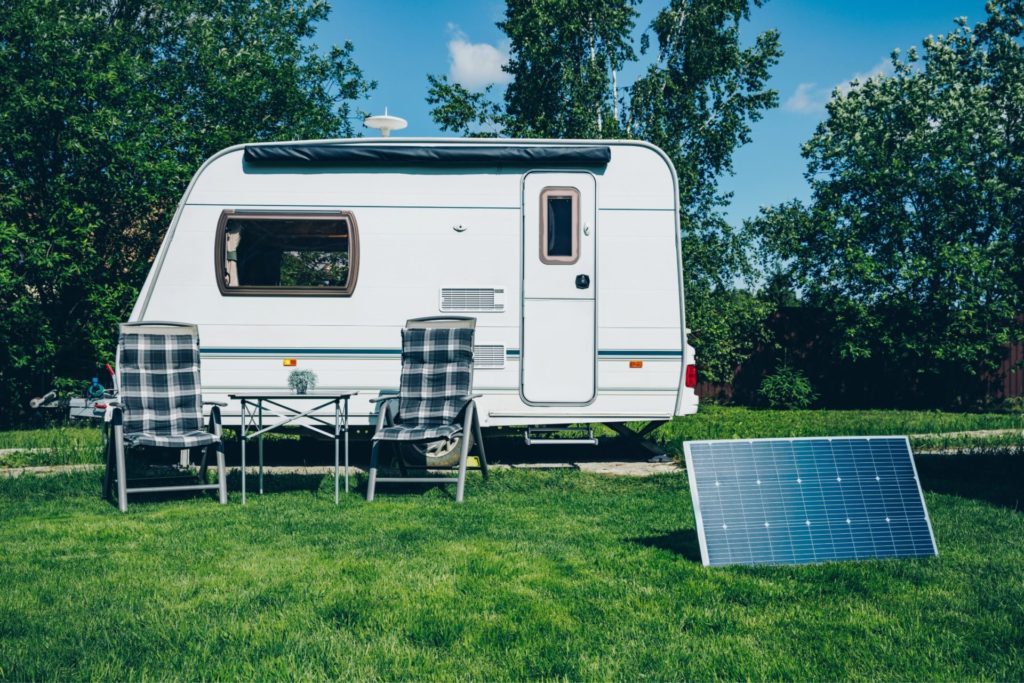
There is something rather appealing about turning up at a campsite, choosing your pitch and knowing that, for the next few days, you don’t really have anywhere else you need to be.
No electric hook-up cable to connect. No worrying about where the nearest shower block is. No need to have every appliance running just because you can.
Off-grid touring, sometimes called wild camping or simply camping without electric hook-up, offers a different way to enjoy your caravan or motorhome. It can take you to quieter locations, often at a lower cost, and encourages you to slow down and make the most of your surroundings.
If you’ve always stuck to fully serviced pitches, the thought of going off-grid might seem a little daunting. What happens if the battery goes flat? Will you run out of gas? How long will your water last?
The good news is that, with a little preparation, going off-grid is much easier than you might think.
At its simplest, off-grid touring means staying somewhere without an electric hook-up. Depending on the location, you may also be without access to mains water, toilets, showers or other campsite facilities.
That doesn’t necessarily mean you have to be completely cut off from civilisation. Many sites offering non-electric pitches still have toilets and showers, while others may be small, basic sites where you are expected to be more self-sufficient.
The key difference is that you are relying on what you bring with you and what your caravan or motorhome can provide.
Your leisure battery becomes your source of electrical power. Gas takes over from mains electricity for cooking, heating and often hot water. Your water supply needs to be carefully managed, and you become much more aware of how much energy and water you are using.
And, strangely enough, that’s part of the appeal.
When you’re on a normal campsite with electric hook-up, it’s easy to forget just how much you rely on mains electricity.
Take away the hook-up and your leisure battery suddenly becomes very important.
The battery supplies power to things such as your lights, water pump, control panels and other 12V equipment. Depending on your caravan or motorhome, it may also power your television, USB charging points and other electrical accessories.
Before setting off, make sure your leisure battery is fully charged and in good condition. If your battery is getting old or struggling to hold its charge, an off-grid trip is probably not the best time to discover it.
If you’re planning to spend more time touring without an electric hook-up, solar power is well worth considering. A roof-mounted solar panel can quietly recharge your battery during daylight hours, while portable solar panels offer a flexible alternative.
Of course, solar power depends on the weather. A bright summer’s day can provide plenty of energy, while several days of grey skies can make things more challenging. That’s why it’s still important to manage your power consumption rather than assuming the solar panel will keep everything running indefinitely.
For regular off-grid touring, a good solar setup combined with a suitable leisure battery can make a huge difference.
One of the easiest ways to extend your battery life is simply to be selective about what you use.
Do you really need the television on all evening? Does the awning light need to be left on? Could you charge your phone while you’re out in the car?
These small things soon add up.
If your caravan has 12V USB charging points, use them where possible. If you have a 12V television, that’s generally going to be more efficient than running a standard household television through an inverter.
An inverter changes the 12V DC power from your leisure battery into 230V AC power, allowing you to use certain mains-powered appliances. They can be incredibly useful, but they also consume a significant amount of battery power, particularly when used with high-powered appliances.
A laptop charger is one thing. A hairdryer, microwave or coffee machine is another!
If you do have an inverter, think carefully about when you use it. For many people, it’s better suited to occasional use rather than powering everything you would normally plug into a mains socket.
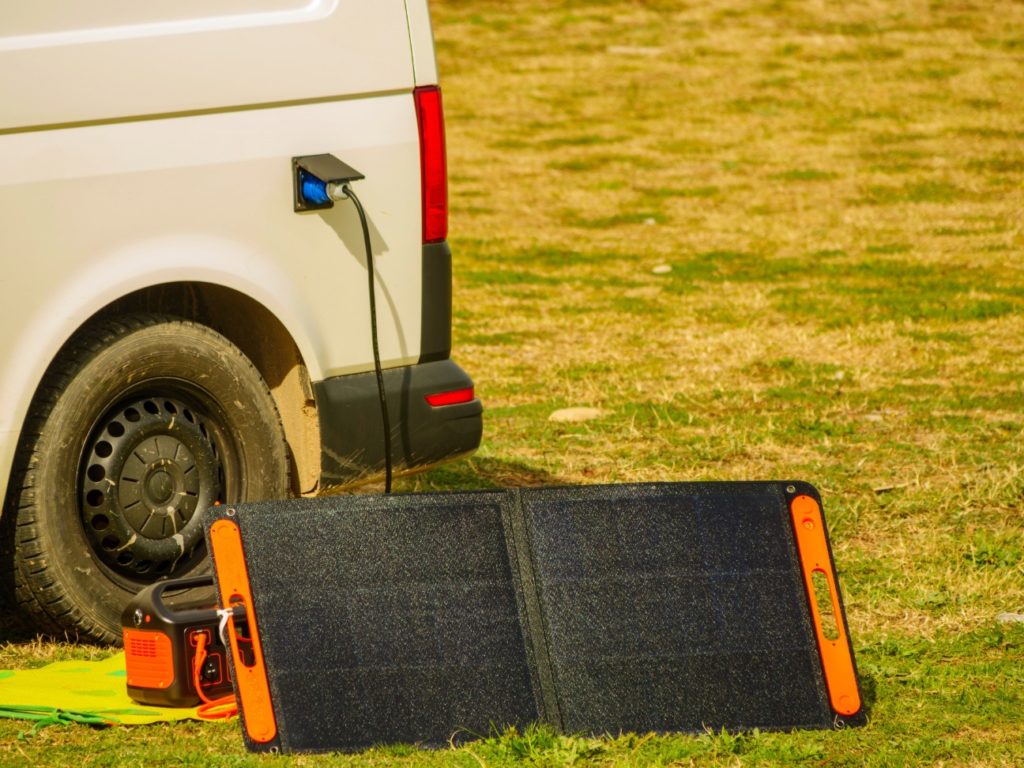
For many caravanners, solar is the missing piece of the off-grid puzzle.
A solar panel doesn’t directly power your caravan’s appliances. Instead, it helps replenish the energy you’ve taken from your leisure battery.
A typical setup consists of the solar panel, a charge controller and the leisure battery. The controller manages the power coming from the panel and ensures the battery is charged correctly.
There are different types of solar charge controllers, but if you’re investing in a new system, an MPPT controller is often considered the more efficient option, particularly in less-than-perfect weather conditions.
The size of the solar panel you need will depend on how you use your caravan. Someone who spends most of the day out exploring and only uses a few lights in the evening will have very different requirements from someone who wants to watch television for several hours and regularly use an inverter.
The important thing is to think about your own touring habits rather than simply buying the biggest system you can afford.
When you’re off-grid, gas becomes just as important as your leisure battery.
Your gas supply may be used for cooking, heating, hot water and, depending on your fridge, refrigeration.
This means you’ll probably use considerably more gas than you would on a campsite with an electric hook-up.
Before you leave home, check your gas supply and make sure you have enough for the length of your trip. It’s always worth having a plan B, particularly if you’re heading somewhere remote or travelling during a busy holiday period when finding a replacement cylinder might not be straightforward.
If you are regular off-grid tourers, refillable gas systems can also be worth considering, although the initial investment needs to be weighed against how often you’ll use them.
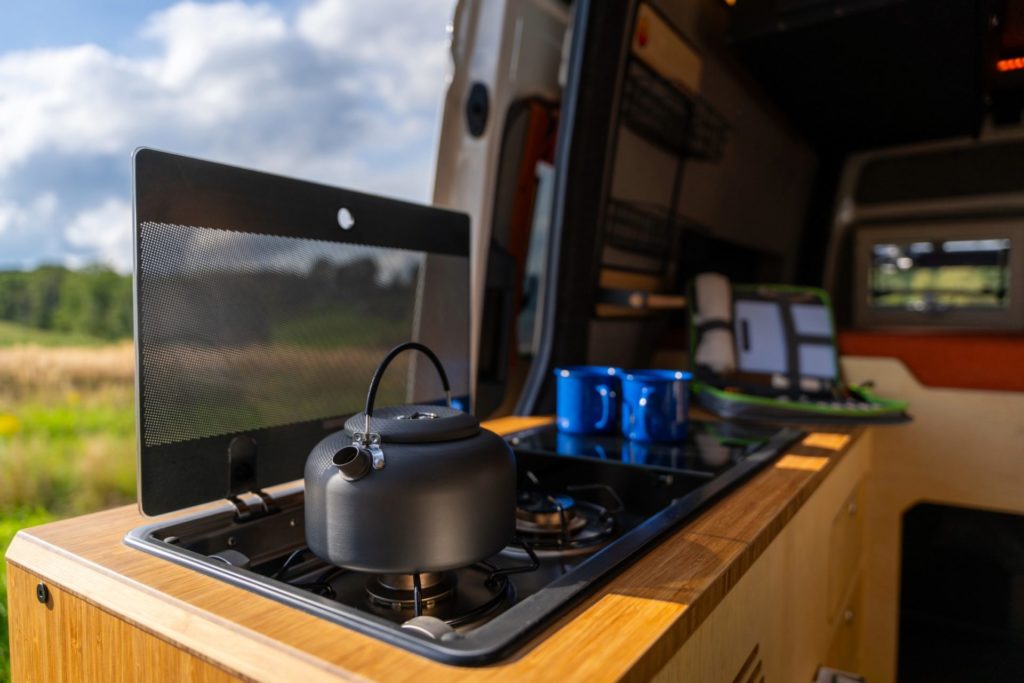
The same principle applies to cooking. Your gas hob is your friend when you’re trying to save battery power. There’s no point using an inverter to power an electric kettle when you can boil the same amount of water on the hob using gas.
And let’s be honest, there’s something quite satisfying about sitting outside with a kettle on the Cadac or BBQ while enjoying the view.
Your fridge is another important consideration.
Many caravans and motorhomes have three-way fridges that can operate using mains electricity, 12V power while travelling, or gas when you’re pitched without an electric hook-up.
When you’re off-grid, gas will generally be your go-to option.
It’s worth remembering that even when the fridge itself is running on gas, the control electronics still require a small amount of 12V power from your leisure battery.
Before setting off, pre-chill your fridge and freezer at home. You can also use frozen freezer blocks to help keep everything cold, particularly if you’re loading the fridge shortly before departure.
Small steps like this reduce the amount of work your fridge has to do once you’re off-grid.
There’s no reason why you can’t enjoy a warm shower or a cosy caravan when you’re off-grid, but you do need to think about how you’re using your resources.
Most caravans and motorhomes can run their heating and hot water systems on gas, although the controls and fans will still use some 12V electricity.
If it’s cold outside, try using timers and heating the caravan only when you really need it. Keeping the heating running all night can use a surprising amount of gas.
The same applies to hot water. Rather than leaving it running continuously, heat the water when you need it.
If you’re washing up, boiling a kettle and using that water can sometimes be quicker and more economical than heating a full tank of hot water.
And don’t underestimate the power of a decent jumper and a warm blanket. Sometimes the simplest solutions are the best!
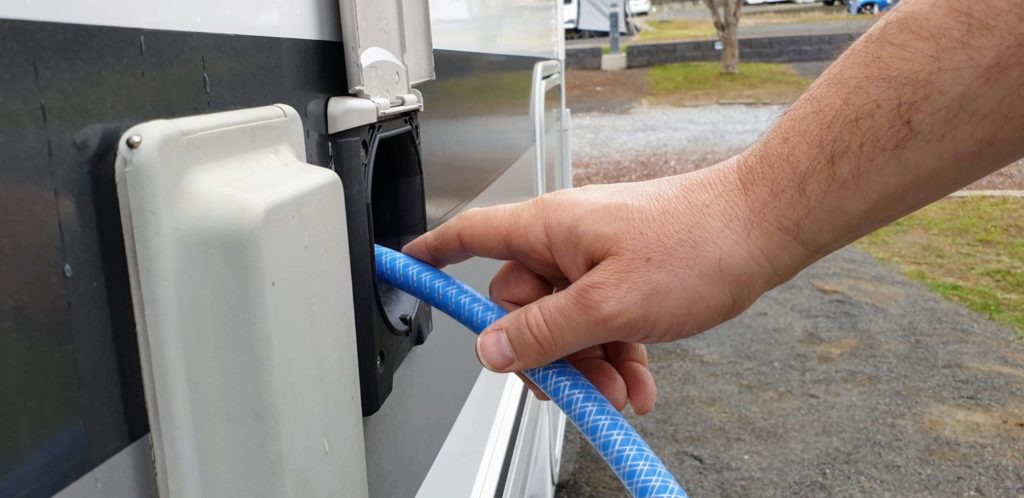
Water is something you probably don’t think much about when you’re on a fully serviced pitch.
When you’re off-grid, you suddenly become much more aware of how quickly you use it.
Drinking, cooking, washing up, showers and flushing the toilet all consume water, and your onboard or portable supply is finite.
Try to arrive with your water tank or containers filled to an appropriate level, but remember that water is heavy. If you’re towing a caravan, carrying unnecessary amounts of water can quickly eat into your available payload.
A quick shower uses much less water than a long one, and using a bowl for washing up can help reduce waste.
If you’re staying somewhere with access to a drinking water tap but can’t get your caravan close enough to fill directly, a suitable portable water container and pump can be incredibly useful.
The same principle applies to your waste water. Keep an eye on your waste container and don’t leave it until the last minute before emptying it.
One of the great things about modern caravans and motorhomes is that they are already designed to operate away from mains electricity.
Many of the systems you use every day are powered by 12V, so you may find that you already have everything you need for a basic off-grid adventure.
LED lighting is a good example. It uses considerably less energy than older lighting technology, so you can enjoy a well-lit caravan without putting too much strain on the battery.
USB charging points are also incredibly useful. Phones, tablets, smartwatches and other small devices can often be charged directly from USB rather than relying on an inverter.
If you are considering upgrading your caravan for more off-grid touring, look for appliances that are designed to run efficiently from 12V.
Off-grid pitches are often found in beautiful rural locations, which means you’ll probably spend more time outside.
That’s one of the best parts of the experience.
It does, however, pay to be prepared.
A good torch is essential, particularly if your pitch is a little way from the facilities. Pack suitable clothing for changing weather conditions, even in summer, as evenings can become surprisingly chilly.
If you’re travelling with a dog, a tick remover is a useful addition to your kit. In warmer weather, insect repellent can make sitting outside much more enjoyable.
A pair of levelling blocks is also worth having. Off-grid pitches aren’t always as perfectly level as those on larger, fully serviced sites.
And don’t forget the outdoor cooking equipment. A BBQ or Cadac can be a brilliant way to cook without using electricity, while also making mealtimes feel like part of the adventure.
One of the questions people often ask is whether you can still enjoy your home comforts while off-grid.
The answer is yes – you just need to be sensible.
A 12V television is an excellent option, as it can run directly from your leisure battery without needing an inverter. Combine that with a low-power soundbar and you can still enjoy a film on a quiet evening.
Just remember that every hour of television is using energy.
If you’re using solar, keep an eye on how much energy you’re putting back into the battery during the day compared with what you’re using at night.
Sometimes, simply switching the television off and sitting outside around a firepit can be even better.
After all, one of the reasons for going off-grid in the first place is to escape the usual distractions.
You don’t need to become an electrical engineer to enjoy off-grid touring, but it’s worth keeping an eye on your battery level.
Many modern caravans have battery monitoring built into the control panel, while standalone battery monitors can provide a more detailed picture of what’s happening.
Try not to run your battery excessively low. The exact safe operating range depends on the type of battery you have, so it’s worth familiarising yourself with the manufacturer’s recommendations.
Lithium batteries, for example, can generally be discharged more deeply than traditional lead-acid batteries, which is one of the reasons they’re becoming increasingly popular with regular off-grid tourers.
The important thing is to understand your own setup.
Once you know how much power you typically use in a day and how much your solar system puts back in, off-grid touring becomes much less of a guessing game.
The thought of running out of power or gas can be enough to put some people off trying off-grid touring.
In reality, most problems are easily avoided with a little planning.
Take a backup gas supply if appropriate. Charge your leisure battery fully before leaving home. Check your solar system is working correctly. Fill your water tank and carry additional drinking water if needed.
It’s also worth knowing where the nearest fuel station, shop or gas supplier is before you arrive.
And if your battery does start getting low, reduce your consumption. Turn off unnecessary lights, unplug devices and avoid using high-powered appliances until you have a chance to recharge.
Some off-grid locations may have arrangements for emergency charging, but you shouldn’t rely on this. It’s better to arrive prepared than to discover you have no power halfway through your stay.
If you’ve never tried off-grid touring before, there’s no need to jump straight into a remote location for a week.
Why not try a single night first?
Choose somewhere relatively close to home and see how you get on. You’ll quickly discover how much gas and water you use, how long your battery lasts and which appliances you really need.
You might find that you use far less than expected.
Alternatively, try a non-electric pitch at a campsite that still provides toilets and showers. This gives you a gentle introduction to living without an electric hook-up while still having access to facilities if you need them.
Once you’ve got the confidence, you can start looking for more remote locations and longer stays.
For me, one of the biggest attractions of off-grid touring isn’t the technology.
It’s the freedom.
It’s waking up somewhere peaceful, opening the curtains and looking out at fields, woodland, hills or the coastline. It’s having breakfast outside with a cup of coffee, heading out for the day without worrying about when you need to be back, and returning to your caravan knowing that everything you need is already there.
You might have to think a little more carefully about electricity, gas and water, but that’s not necessarily a bad thing. It makes you more aware of what you’re using and encourages you to slow down.
And perhaps that’s the real secret to successful off-grid touring.
You don’t need to give up all your home comforts. You simply need to be a little more thoughtful about how you use them.
So, charge the battery, check the gas, fill the water tank, pack the kettle and head off.
The grid will still be there when you get back.
Happy touring!